
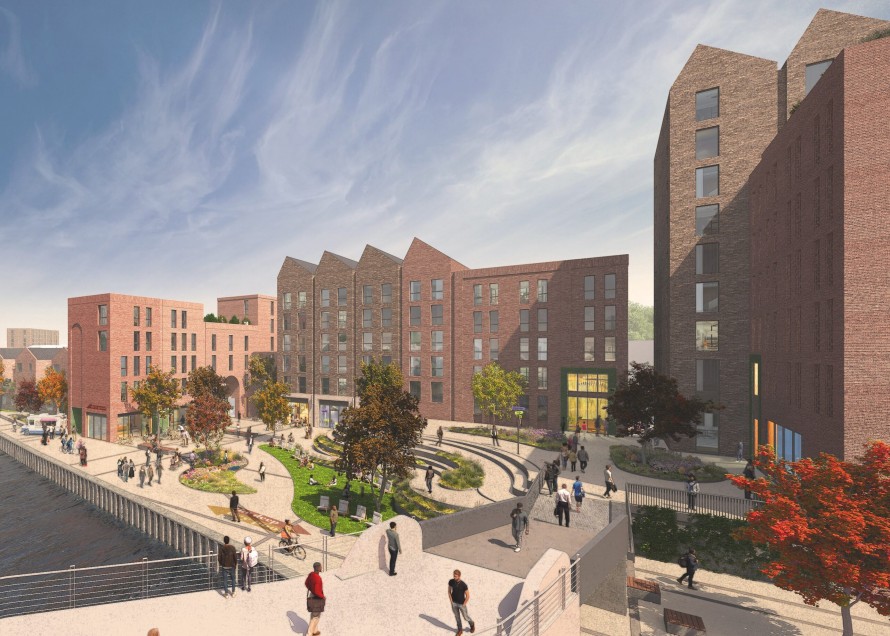
Clean air, safe walking routes, places to cycle, green spaces, room to play, places to stop, meet and breathe. These should be there from the start; from the moment we step outside our front door.
This is why active design matters.
Tony Forrester, our Head of Programmes and Projects, has started to feel the need for green spaces in a way he has never noticed before. Not just somewhere to go for a long walk, but something he can see, hear and feel around him.
He explains: “I want to see trees moving in the wind. Birds in the distance. Water. Open sky. Life. If it is not there, I find myself missing it.
I have also realised how much I need to see people living ordinary lives around me. Whether this be, dog walkers passing by, children riding bikes, someone sitting on a bench reading a book or a neighbour giving a wave. People using a place in the way it was meant to be used.
"These are simple things, but they matter. They calm us. They connect us. They remind us we are part of something bigger.
That is why we should not just be designing houses; we should be designing life."
When a place is planned well, it quietly supports healthier lives every day. It encourages people to walk a bit more, cycle a bit more, stop and talk, spend time outside and feel connected to where they live. It does this without needing to say a word.
A badly designed place does the opposite.
Tony adds: “I recently spoke to a lady who had taken her mum out in a wheelchair just to get some fresh air. Something simple. Something most of us would take for granted. But the paths were so poorly maintained it became impossible to push the chair safely. What should have been a small act of care turned into frustration.
That is the part that stays with me.”
When paths are broken, uneven or blocked, it is not only poor design or maintenance it is people being shut out. It’s their independence reduced, and its joy taken from moments that should be easy.
Tony says that’s why each place must be suitable for everyone, not just those who can step over a kerb or walk that extra distance.
“We need to think about wheelchair users, older people, parents with prams, people with limited mobility. People who need somewhere to stop and rest and people who simply want to feel safe and included.
Good design says you belong here too.”
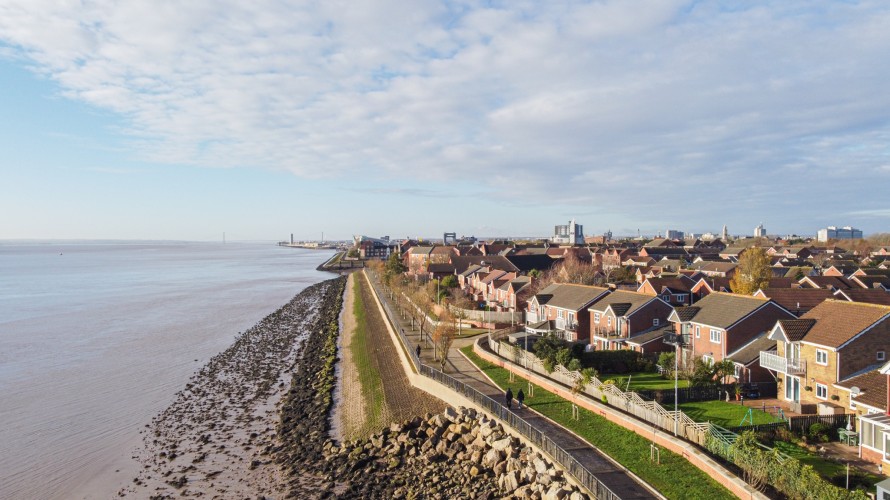
When we design spaces that encourage people to walk, sit, talk and spend time outside, we are not just supporting physical activity. We are helping create communities where people look out for each other, even in small ways.
Tony reflects on how these environments make us feel safe within our communities: “A place does not feel safe just because it is well designed on paper. It feels safe when people are in it. When it is used. When it is alive.
A simple wave to a neighbour might not seem like much, but it is recognition. It is familiarity and it is connection. Over time, that is what builds a feeling of safety.”
At Active Humber, we are so pleased to support the plans for East Bank Urban Village. The active design features were clear throughout with planned walking and cycling routes, green spaces, biodiversity and cleaner air through reduced vehicle use. It is all there, built into the design from the start.
The future of health is not only in hospitals or clinics. It is in our streets, footpaths, green spaces, benches, crossings and cycle routes. It is in the places that make people want to step outside and be part of everyday life.
Along the Humber, you can already see glimpses of what this looks like, families walking together, children cycling and scooting, people fishing or sitting and watching the water.
As Chris Whitty said, “if physical activity could be packaged as a medicine, it would be considered a ‘wonder drug’”. It can extend life and reduce the risk of serious illness.
This is why we want developers, planners and designers to engage with us. We are here to support, to challenge where needed, and to help get this right. To not only bring people’s voices into the conversation but to help keep health, movement, accessibility and community in view while plans are taking shape.
If you are planning, designing or shaping places in our region, this is the moment to think differently, and we are here to support that conversation. Because in the end, this is not about developments, it is about our local people.
And we are not just building places, we are shaping better futures. A true design for life.
Tony Forrester, Head of Programmes and Projects
Tony Forrester, Head of Programmes and Projects


